
Which filter your aquarium needs, based on its volume
No piece of equipment affects water quality more than the filter. How to work out the flow you need, which type suits each tank size and the maintenance mistakes that undo cycling.

A filter does not strain the water: it houses the bacteria that keep it healthy. Holding back the dirt you can see is the least of it. That is why flow and the media it can hold matter, and why it is cleaned with more care than anything else in the tank.
What a filter really does
Three things happen inside a filter, in this order of importance. Biological filtration, the bacteria turning ammonia into nitrite and nitrite into nitrate, takes place on ceramic rings, sponges and any surface that oxygenated water flows past. Mechanical filtration traps particles in sponges or floss, and it is the part that needs cleaning. Chemical filtration, with activated carbon or resins, is optional and meant for specific cases, such as removing traces of a medication.
That gives the buying criterion: a good filter is not the one that moves the most water, but the one that moves enough and has room for plenty of biological media.
Flow: 4 to 6 times the volume per hour
| Tank | Flow | Usual filter |
|---|---|---|
| Up to 40 l | 150–250 l/h | Sponge or hang-on-back |
| 40–100 l | 250–600 l/h | Hang-on-back or internal |
| 100–200 l | 500–1,200 l/h | Canister |
| Over 200 l | 1,000 l/h or more | Canister, sometimes two |
Which type to choose
A sponge filter runs on an air pump, sucks nothing in and is the standard for shrimp and fry tanks; in exchange it moves little water and spoils the view. A hang-on-back filter hangs on the glass, takes no room inside and is the easy choice up to about 100 litres, though it holds little media. An internal filter sits underwater and steals space, but is easy to clean. A canister sits in the cabinet with hoses: quiet, out of sight and with the most room for media, which is why it takes over from 100 litres up.
| What to look for | Why |
|---|---|
| Real flow for the volume | 4 to 6 times the litres per hour, allowing for the drop the media causes. |
| Basket capacity | More biological media means more margin when something goes wrong. |
| Adjustable flow | Lets you suit it to fish that dislike current. |
| Easy priming and hose taps | On canisters, this is what keeps cleaning from becoming a battle. |
| Spare parts available | Seals and impellers wear out; a filter without spares gets thrown away whole. |
Fish that dislike current
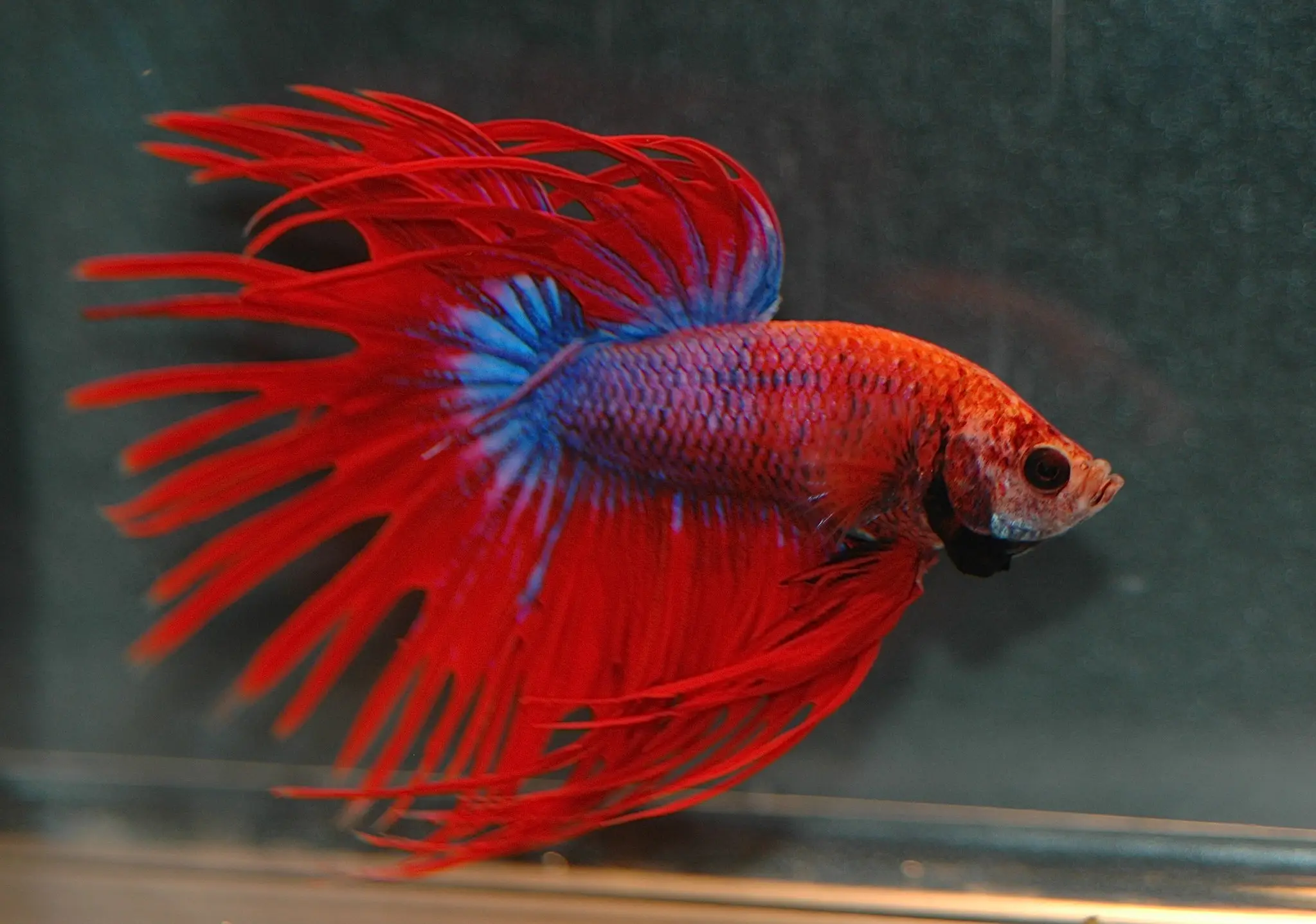
The flow the volume calls for is not always the flow the fish want. Long-finned fish such as the betta or the dwarf gourami come from almost still water and wear themselves out swimming against the current: they hide, stop eating or stay pinned to a corner.
There is no need to cut filtration for them. Turning the flow down, aiming the outlet at the glass or breaking it up with plants or a sponge is enough.


With shrimp or fry the risk is the opposite: the filter intake sucks them in. A pre-filter sponge on the intake prevents it, and adds surface for bacteria as a bonus. Red Cherry shrimp spend the day grazing on that sponge.
Cleaning it without losing the bacteria
A spotless filter is a filter that has lost what made it useful. Clean it when the flow drops, not by the calendar, and with some judgement:
- Always with tank water, in a bucket, during a water change.
- Squeeze sponges until they stop releasing sludge; they do not need to look new.
- New media goes in bit by bit: never all at once.
- Ceramic rings almost never need replacing.
New tank? The filter has to mature before any fish go in: how to cycle an aquarium. And for the other essential piece of kit, the heater guide.
Cover photo: Pogrebnoj-Alexandroff, CC BY-SA 3.0.
Recommended products
 Filter
Fluval 207
Picked for this guide
106.99 EUR approximate price as of 9/24/2026
Filtro externo para acuarios de 100 a 200 litros. Admite mucho material biológico, que es lo que de verdad mantiene el agua sana.
 Filter
JBL CristalProfi e902
Picked for this guide
112.99 EUR approximate price as of 9/30/2026
Filtro externo para acuarios de 90 a 300 litros y de 80 a 120 cm. Va en el mueble; el caudal de catálogo baja al cargarlo de material.
 Filter
Seachem Tidal 55
Picked for this guide
65.99 EUR approximate price as of 9/24/2026
Filtro de mochila que se cuelga del cristal y no resta sitio dentro. Su cesta admite más material que una mochila corriente.
These are Amazon affiliate links. If you buy through them, I may receive a small commission at no extra cost to you. It helps keep this website free. Thank you!