Cycling an aquarium: tests, timing and why fish must wait
A newly set-up aquarium cannot support fish yet. What happens during cycling, how to do it without animals, what to measure every few days and which signs show it is finished.

A freshly set-up aquarium has crystal-clear water and is the worst possible place for a fish. It is missing what you cannot see: the bacteria that turn waste into something harmless, and that take weeks to settle in. Cycling means waiting for them to arrive, and measuring how they do it.
What happens inside the filter
Everything that goes into the aquarium ends up as ammonia: leftover food, rotting leaves and, above all, what the fish excrete. Ammonia is toxic even in small amounts, and more so the higher the pH and the warmer the water.
A first group of bacteria turns it into nitrite, which is also toxic: it gets in the way of blood carrying oxygen. A second group converts nitrite into nitrate, far less harmful, which plants take up and water changes remove. These bacteria do not float in the water: they live on the filter media, the gravel and every other surface. That is why a water change does not touch them, and rinsing the filter under the tap wipes them out.
| Stage | What the test shows | Roughly when |
|---|---|---|
| 1 | Ammonia rises; nitrite at zero | First and second week |
| 2 | Ammonia falls and nitrite shoots up | Second to fourth week |
| 3 | Ammonia and nitrite at zero; nitrate appears | Fourth to sixth week |
The timings are a guide: a cold tank, a low pH or too little ammonia can take twice as long.
What you need
The essential item is a liquid test kit for ammonia, nitrite and nitrate. Strips are fine for a quick look, but they do not read small amounts well, and during cycling the difference between 0 and 0.25 mg/l is exactly what you need to see.
You also need something that produces ammonia while there are no fish. The simplest option is a pinch of food every other day; the most precise, pure ammonia with no scent or soap, dosed to about 2 mg/l. And a water conditioner for tap water: the chlorine in it kills the very bacteria you are trying to grow.
Step by step, without fish
- Set up the tank with the filter and heater running day and night, between 25 and 28 °C: bacteria multiply faster in the warmth.
- Add the ammonia source and keep it going throughout.
- Test ammonia and nitrite every two or three days and write the results down: the trend says more than a single reading.
- Do not clean the filter or change its media until the cycle is done.
Reading the tests
| What you see | What it means | What to do |
|---|---|---|
| High ammonia, zero nitrite | Stage 1: the first group of bacteria is not there yet. | Wait and keep testing. |
| Ammonia falls and nitrite rises | Stage 2: the cycle is moving. | Nothing, it is going well. |
| Nitrite above 5 mg/l for weeks | Too much nitrite holds back the second group of bacteria. | Change half the water and cut back the ammonia source. |
| Nothing moves in two or three weeks | Usually a pH below 6.5 or cold water. | Check pH and temperature before adding more ammonia. |
| Ammonia and nitrite at zero within 24 hours, nitrate present | Cycling is complete. | A big water change and the first fish. |
How to speed it up
The only thing that really shortens cycling is bringing in bacteria that already exist. A sponge, a handful of ceramic rings or some gravel from a healthy, mature tank, placed in the new filter, can have it ready in days instead of weeks. Bottled bacteria give very uneven results: they help in some cases and do nothing in others, so they do not let you skip testing.
If there are already fish


It happens a lot: the fish arrived on day one. The cycle takes place all the same, but with the fish swimming in their own ammonia, and bottom dwellers such as corydoras tend to feel it first.
Test daily, feed very little, and change a third to a half of the water as soon as ammonia or nitrite goes above 0.25 mg/l. Not a single fish more until both readings stay at zero.
Done: how the animals go in
The filter only supports the load it has grown used to. If it was cycled on a pinch of food, twenty fish at once will overwhelm it. Animals go in batches, a week or two apart, with ammonia and nitrite tested after each one. And if several days pass between the end of cycling and the first fish, keep feeding the bacteria.
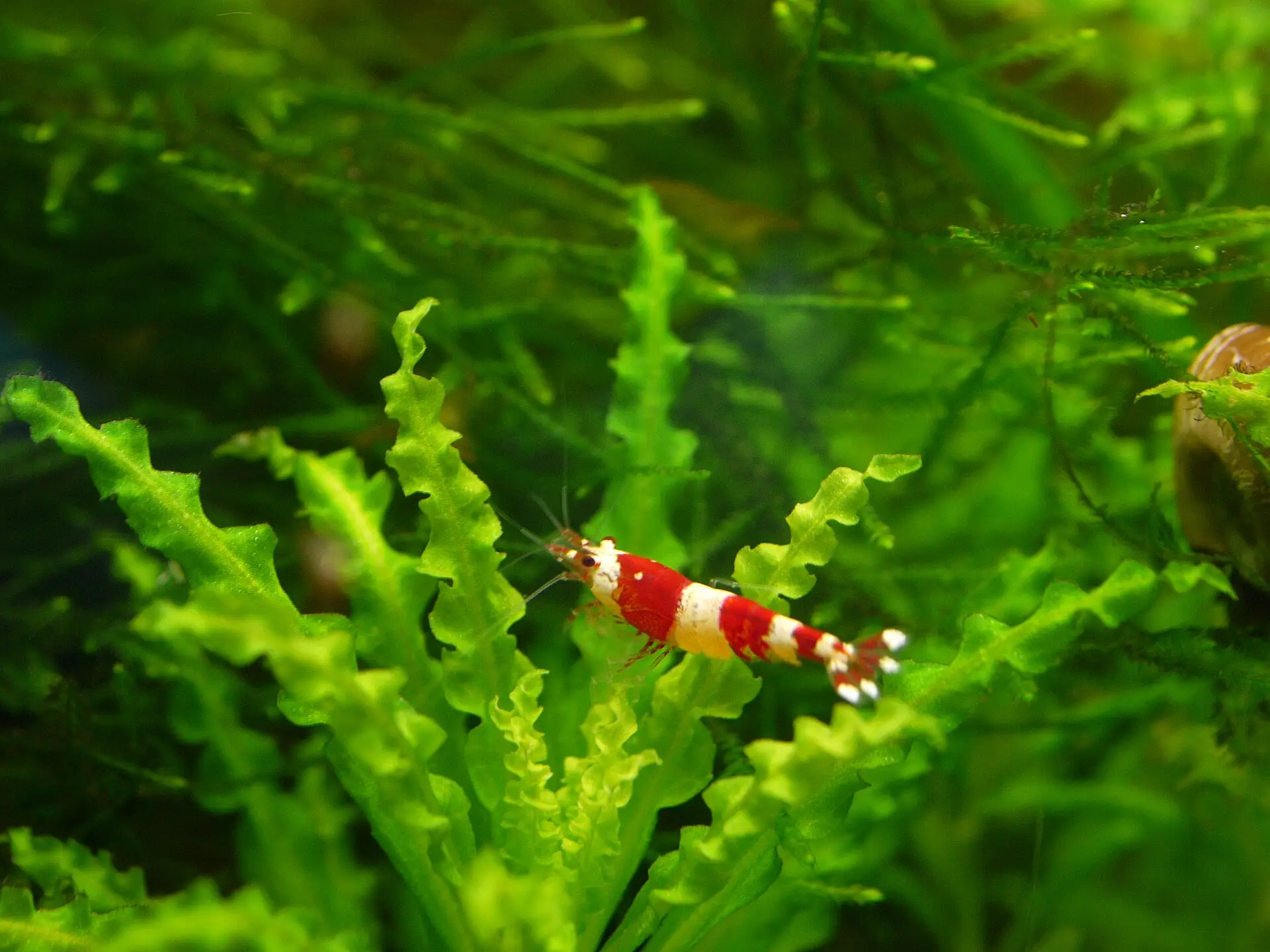
The most delicate go last. Neon tetras do poorly in newly cycled tanks, and shrimp such as the Crystal Red need months of stable water before they go in.


.jpg)
.jpg)
Before choosing inhabitants: read how to choose fish without making mistakes and look each species up in the fish search and the invertebrate search.
Cover photo: Uccio D'Agostino, CC BY 4.0.

Recommended products
 Other
Other
Acondicionador de agua
9.95 EUR approximate price as of 9/24/2026
Anticloro para el agua del grifo, en cada cambio. El cloro mata las bacterias del filtro, que son las que mantienen sano el acuario.
 Heater
JBL Protemp S 50 W
32.94 EUR approximate price as of 9/24/2026
Calentador con termostato de 50 W: lo que pide un acuario de unos 60 litros en una habitación a 20 °C o más.
 Water test
NT Labs Aquarium Lab Multi Test Kit
51.08 EUR approximate price as of 9/24/2026
Test de gotas de amoniaco, nitritos, nitratos, pH, GH y KH. Es el que hace falta para ciclar y para medir después.
These are Amazon affiliate links. If you buy through them, I may receive a small commission at no extra cost to you. It helps keep this website free. Thank you!