


Descripción
El guppy es el pez de acuario más popular del mundo, y no es casualidad. Ha introducido a generaciones enteras en la acuariofilia, ha protagonizado experimentos fundamentales sobre selección sexual en biología evolutiva, y se ha dispersado por todo el planeta —a veces con consecuencias ecológicas complejas— como controlador biológico de mosquitos.
En el acuario, los machos son una exhibición constante de la selección natural: nadan entre las hembras con las aletas desplegadas, compitiendo en un desfile de colores que puede abarcar desde el blanco puro hasta todos los azules, verdes y rojos iridiscentes imaginables. Las hembras son considerablemente más grandes y de aspecto más sobrio. Es un pez resistente, adaptable y muy agradecido.
Un dato relevante: los guppys salvajes se ven muy diferentes a los de tienda. Los machos en la naturaleza son mucho menos llamativos —su coloración está directamente modulada por la presión de depredación. En zonas con muchos predadores los machos son más discretos; en entornos seguros, son más coloridos. Esta plasticidad es uno de los mejores ejemplos naturales documentados de selección sexual.
Comportamiento
Los machos viven en un estado casi permanente de cortejo. Si hay hembras, las perseguirán sin descanso. Esto tiene consecuencias prácticas:
- Solo machos: puede parecer la opción estética, pero genera ansiedad al privarlos de su principal impulso conductual.
- Más machos que hembras: las hembras acaban agotadas y estresadas, lo que las hace más propensas a enfermedades.
- Proporción recomendada: 1 macho por cada 2–3 hembras.
No son peces territoriales en sentido estricto. Los machos compiten entre sí por las hembras pero sin agresión física relevante. La jerarquía entre machos es suave y cambiante.
Hábitat
Los guppys (Poecilia reticulata) habitan de forma natural en los cálidos ríos, arroyos y estanques de América del Sur y el Caribe. Estas aguas, generalmente de corriente lenta, ofrecen un entorno tranquilo donde estos pequeños peces pueden prosperar. Su hogar suele estar rodeado de una vegetación exuberante, tanto dentro como fuera del agua. Las plantas acuáticas son esenciales en su hábitat, ya que les brindan refugio, áreas de reproducción y una fuente constante de alimento en forma de microalgas y organismos pequeños que viven entre las hojas.
El agua donde los guppys viven es limpia y cálida, con temperaturas que oscilan entre los 22 y los 28 grados centígrados. Aunque suelen preferir aguas ligeramente alcalinas, con un pH que va de 6.8 a 7.8, también tienen una asombrosa capacidad de adaptación a diferentes condiciones. La dureza del agua tiende a ser moderada o alta, lo que refleja la composición mineral de los ríos y arroyos donde se encuentran.
El suelo de estos cuerpos de agua puede ser arenoso o lodoso, proporcionando un rico sustrato para el crecimiento de plantas acuáticas y el desarrollo de pequeños invertebrados que forman parte de su dieta. Los guppys son omnívoros oportunistas y se alimentan de una amplia variedad de fuentes, como larvas de insectos, pequeños crustáceos, algas y materia orgánica en descomposición. Esta dieta variada es clave para su resistencia y éxito en diferentes entornos.
La vida en su hábitat natural no está exenta de desafíos. Los guppys comparten su espacio con otras especies de peces, anfibios y pequeños crustáceos, y a menudo deben estar alerta para evitar a los depredadores más grandes, como peces mayores y aves acuáticas. Esta constante amenaza ha desarrollado en ellos una habilidad excepcional para nadar rápidamente y reproducirse con gran eficacia, asegurando la supervivencia de su especie incluso en condiciones difíciles.
Los guppys también experimentan cambios estacionales en su entorno. Durante la temporada de lluvias, los niveles del agua aumentan y las corrientes se renuevan, oxigenando el agua y favoreciendo la dispersión de los peces hacia nuevas áreas. En estos momentos, los guppys aprovechan para reproducirse y colonizar nuevos hábitats, mostrando su capacidad de adaptación y su espíritu explorador.
Al observar su entorno natural, queda claro que los guppys no solo son peces coloridos y resistentes, sino también criaturas perfectamente adaptadas a un ecosistema dinámico y diverso. Su capacidad para prosperar en una variedad de condiciones es una de las razones por las que han capturado el interés de acuaristas de todo el mundo.
Hábitats
Peces que comparten hábitat
Estos peces aparecen en uno o mas habitats asociados a esta ficha. No implica compatibilidad directa en acuario.

Detalles
🌊 Valores del agua
🐠 Tamaño mínimo del acuario
Reproducción
Reproducir peces guppy es una experiencia fascinante y, con las condiciones adecuadas, bastante sencilla. Estos pequeños peces vivíparos tienen un instinto natural para reproducirse, pero puedes maximizar las posibilidades de éxito siguiendo algunos pasos básicos.
Todo comienza con la selección de los padres. Es importante asegurarte de que los guppys estén saludables, activos y libres de enfermedades. Los machos suelen tener colores más vibrantes y aletas llamativas, mientras que las hembras son más grandes y con colores menos intensos. Para evitar que las hembras se estresen, es recomendable mantener una proporción de al menos dos o tres hembras por cada macho, ya que los machos tienden a perseguirlas constantemente para cortejarlas.
El acuario juega un papel crucial en el proceso. Necesitarás un tanque de al menos 20 litros, con agua limpia y bien filtrada. Ajusta la temperatura a un rango entre 24 y 28 °C, ya que el agua más cálida estimula el apareamiento. Además, es esencial incluir plantas como musgo de Java o ambulia, ya que no solo decoran el acuario, sino que también proporcionan refugio para las crías una vez que nazcan.
Una vez que los guppys están en el acuario, el macho comenzará su ritual de cortejo. Lo verás desplegar sus aletas y nadar en movimientos llamativos alrededor de la hembra. Si la hembra acepta, el macho utiliza su gonopodio para transferir esperma, un proceso que ocurre en cuestión de segundos. Lo interesante de los guppys es que las hembras pueden almacenar el esperma y tener múltiples camadas a partir de una sola fecundación.
Después de unas semanas, notarás cambios en la hembra. Su abdomen comenzará a abultarse y una mancha oscura aparecerá cerca de su aleta anal; esta mancha de gravidez es un indicador de que las crías están en desarrollo. Cuando el momento del parto se acerca, es posible que la hembra busque un lugar tranquilo en el acuario.
El nacimiento de las crías es un evento sorprendente. La hembra puede dar a luz entre 20 y 50 alevines, dependiendo de su tamaño y experiencia. Los alevines nacen completamente formados y comienzan a nadar casi de inmediato. Es aquí donde debes actuar rápidamente: los guppys adultos, incluida la madre, pueden comerse a las crías, por lo que es ideal trasladarlas a un tanque separado o asegurarte de que haya suficientes plantas donde puedan esconderse.
En cuanto a la alimentación, los alevines necesitan comida muy fina, como polvo para crías, nauplios de artemia o infusorios. Alimentarlos varias veces al día les ayudará a crecer rápidamente y a desarrollar colores vivos, los cuales serán un reflejo de los genes que seleccionaste en los padres.
Reproducir guppys no solo es una actividad educativa y entretenida, sino que también te permite observar de cerca los fascinantes comportamientos de estos peces tan populares en la acuariofilia.
Dieta
Tienen una dieta omnívora que les permite disfrutar de una amplia variedad de alimentos.
En su entorno natural, suelen alimentarse de pequeños insectos, larvas y algas, pero en un acuario puedes recrear esta diversidad de formas sencillas.
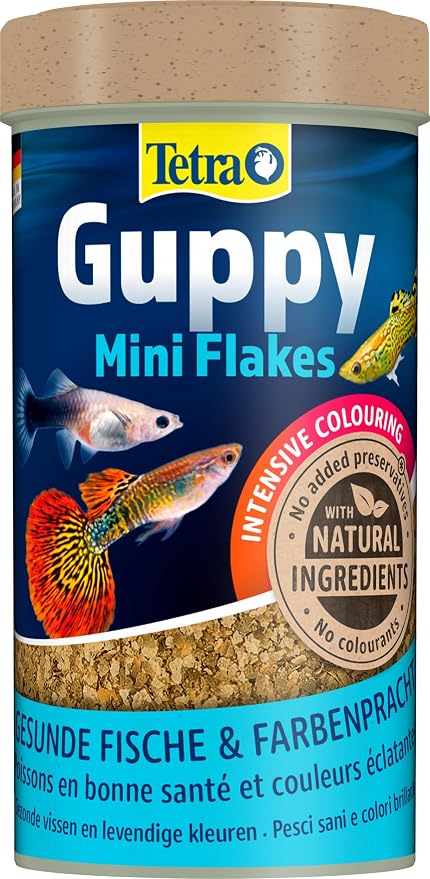
Para comenzar, puedes darles hojuelas o pellets diseñados para peces tropicales, ya que suelen estar formulados con los nutrientes necesarios para su salud. Sin embargo, es importante complementar su alimentación con opciones más frescas y variadas. Por ejemplo, alimentos vivos o congelados, como artemia, daphnia o larvas de mosquito, son una excelente fuente de proteínas y nutrientes esenciales.
También puedes incluir alimentos vegetales, como espinaca o calabacín previamente escaldados, que les aportan fibra y vitaminas importantes.
Lo ideal es alimentarlos varias veces al día en pequeñas cantidades, asegurándote de que no sobre comida en el acuario, ya que esto podría deteriorar la calidad del agua.
Con una dieta equilibrada y variada, tus guppys estarán llenos de energía, con colores brillantes y en perfecto estado de salud.
¿Y en tu acuario?
Indica los valores de tu acuario y verás solo las especies compatibles que encajan en ellos. Los litros se aplican a los peces.
Peces compatibles
Orientación general basada en parámetros, comportamiento y excepciones conocidas; revisa siempre las necesidades concretas de cada ejemplar y del acuario.


Comparten agua: pH 7–7,5 y 22–27 °C.


Comparten agua: pH 7 y 22–28 °C. Coinciden justo en el límite, así que el acuario tendrá que mantenerse ahí.

Comparten agua: pH 7–8 y 22–26 °C.

Comparten agua: pH 7–7,5 y 20–25 °C.

Comparten agua: pH 7–7,5 y 18–24 °C.

Comparten agua: pH 7–8 y 22–28 °C.

Comparten agua: pH 7–7,5 y 25–28 °C.

Comparten agua: pH 7–7,5 y 24–28 °C.

Comparten agua: pH 7,5–8 y 24–28 °C. Coinciden justo en el límite, así que el acuario tendrá que mantenerse ahí.

Comparten agua: pH 7,5–8 y 24–28 °C. Coinciden justo en el límite, así que el acuario tendrá que mantenerse ahí.

Comparten agua: pH 7 y 20–26 °C. Coinciden justo en el límite, así que el acuario tendrá que mantenerse ahí.

Comparten agua: pH 7–7,2 y 22–26 °C.

Comparten agua: pH 7–7,5 y 20–26 °C.

Comparten agua: pH 7–8 y 22–27 °C.

Comparten agua: pH 7 y 26–28 °C. Coinciden justo en el límite, así que el acuario tendrá que mantenerse ahí.

Comparten agua: pH 7 y 22–26 °C. Coinciden justo en el límite, así que el acuario tendrá que mantenerse ahí.

Comparten agua: pH 7–7,5 y 22–26 °C.

Comparten agua: pH 7–7,5 y 23–28 °C.

Comparten agua: pH 7–7,5 y 23–27 °C.

Comparten agua: pH 7–8 y 22–28 °C.
Invertebrados compatibles
Orientación general basada en parámetros, comportamiento y excepciones conocidas; revisa siempre las necesidades concretas de cada ejemplar y del acuario.

Comparten agua: pH 7–8 y 20–28 °C.

Comparten agua: pH 7–8 y 18–25 °C.

Comparten agua: pH 7,5–8 y 24–28 °C.

Comparten agua: pH 7–8 y 22–28 °C.

Comparten agua: pH 7–7,5 y 20–26 °C.

Comparten agua: pH 7–7,5 y 18–27 °C.

Comparten agua: pH 7,5–8 y 27–28 °C.

Comparten agua: pH 7–8 y 20–28 °C.

Comparten agua: pH 7–7,5 y 18–26 °C.

Comparten agua: pH 7–7,5 y 18–26 °C.

Comparten agua: pH 7–7,5 y 18–26 °C.

Comparten agua: pH 7–7,5 y 18–26 °C.

Comparten agua: pH 7–7,5 y 18–26 °C.

Comparten agua: pH 7–8 y 22–28 °C.

Comparten agua: pH 7–8 y 18–28 °C.
Productos recomendados
.jpg)


.JPG)

_-_360070513.jpeg)


.jpg)


.jpg)

Estos enlaces son de afiliado de Amazon. Si compras a través de ellos, recibo una pequeña comisión sin ningún coste adicional para ti. Me ayuda a mantener esta web gratuita. ¡Gracias!
Fuentes
- FishBaseFroese y Pauly (eds.), 2026. FishBase.
- Rodriguez (1997)Rodriguez, C.M. (1997). Phylogenetic analysis of the tribe Poeciliini. Copeia, 1997(4): 663–679.
Planifica tu próximo acuario
¿Te encaja este pez? Planifica un acuario a su medida antes de montarlo.