


Description
The Endler's livebearer is a small, vibrant fish often found in tropical aquariums. Its striking colors—ranging from metallic greens to bright oranges and blues—add a lively touch to any tank. Active and curious by nature, it’s constantly swimming with quick, agile movements, making it an engaging species to watch.
Peaceful and easy to care for, it adapts well to community tanks with similarly calm tank mates. Its compact size and hardiness make it a great choice for both beginners and seasoned aquarium enthusiasts.
Behavior
The Endler's livebearer exhibits active, energetic, and curious behavior. These fish spend most of their time exploring their surroundings and swimming in groups. Male Endlers, in particular, often display vibrant, rapid movements as part of their courtship rituals to attract females. Despite their lively nature, they are peaceful fish that get along well with other similarly calm species.
In community tanks, Endlers typically stay in the middle to upper levels, interacting with each other and other fish without showing aggression. Their sociable and tranquil nature makes them excellent companions, bringing constant movement and vitality to any aquarium.
Habitat
The natural habitat of the Endler's livebearer is found in the tropical, warm waters of Venezuela, particularly in shallow rivers and streams around the Cumaná region. These environments have soft water with a slightly acidic to neutral pH and temperatures ranging from 22°C to 28°C. Endlers typically inhabit areas with dense vegetation, which provides shelter and food sources like algae, small invertebrates, and organic detritus.
In the aquarium, it’s ideal to replicate their natural habitat. A tank with soft, slightly acidic or neutral water, and warm, stable temperatures is recommended. Endlers also enjoy an environment with floating or aquatic plants, which not only offer shelter and shade but also mimic their natural habitat where they can find food and hide.
Since they are active and social fish, they appreciate having space to swim and explore. Additionally, they prefer calm waters without strong currents, so moderate filtration is important to keep the water clean without creating excessive turbulence.
Habitats
Fish sharing this habitat
Estos peces aparecen en uno o mas habitats asociados a esta ficha. No implica compatibilidad directa en acuario.

Details
🌊 Water parameters
🐠 Minimum tank size
Breeding
The reproduction of the Endler's livebearer is relatively easy and usually occurs naturally in well-maintained aquariums. These fish are viviparous, meaning the females give birth to fully formed fry instead of laying eggs. Reproduction typically begins when the male reaches sexual maturity, which usually occurs around 3 months of age. During this time, males become very active, swimming rapidly around the females, often performing vibrant courtship displays to attract them.
Once the female is fertilized, the gestation period lasts between 3 to 4 weeks, depending on factors like water temperature and general tank conditions. Females can give birth to anywhere from 10 to 30 fry at a time, although some may have as many as 50. The fry are born fully formed and can swim immediately.
An interesting feature of Endler reproduction is that females can store sperm for several weeks, allowing them to give birth to multiple batches of fry without needing to be fertilized again by a male. This can lead to rapid population growth if there are several males and females in the tank.
To care for the fry, it's advisable to provide hiding spaces or separate areas within the aquarium where they can escape from the adults, especially the males, who may attempt to mate with them again.
Diet
The diet of the Endler's livebearer is varied and omnivorous, meaning they enjoy a wide range of foods from both animal and plant sources. In the wild, they feed on algae, small invertebrates, and organic detritus found in their aquatic environment.
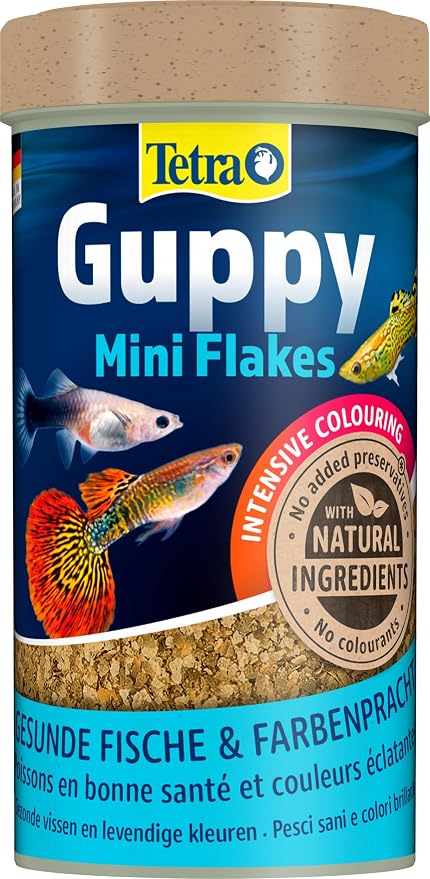
In the aquarium, their diet can be balanced with commercial foods like flakes or pellets formulated specifically for small, tropical fish, providing essential nutrients for their health. You can also supplement their diet with live or frozen foods like brine shrimp, daphnia, or mosquito larvae, which offer vital proteins.
It’s also important to include vegetable-based foods like blanched spinach, lettuce, or even algae in powder or flake form, which are excellent sources of fiber and vitamins. Occasionally, you can offer them tablet or pellet foods designed for herbivorous fish to help maintain dietary balance.
A good rule of thumb is to feed them two to three times a day in small amounts that they can consume within a few minutes. This will prevent excess food in the tank, which could affect water quality.
What about your tank?
Enter your tank's values to see only the compatible species that fit them. Litres apply to fish.
Compatible fish
General guidance based on water parameters, behaviour and known exceptions; always review the individual animals' and aquarium's specific needs.


They share water: pH 6.5–7.5 and 22–27 °C.

They share water: pH 6.5–7.5 and 22–27 °C.

They share water: pH 6.5–7.5 and 22–27 °C.

They share water: pH 6.5–7.5 and 24–28 °C.

They share water: pH 6.5–7 and 22–28 °C.

They share water: pH 6.5–8 and 22–26 °C.

They share water: pH 6.5–7.5 and 22–25 °C.

They share water: pH 6.5–7.5 and 22–24 °C.
They share water: pH 7–8 and 22–28 °C.

They share water: pH 6.5–7.5 and 25–28 °C.

They share water: pH 7.5–8 and 24–28 °C.

They share water: pH 7.5–8 and 24–28 °C.

They share water: pH 6.5–7 and 22–26 °C.

They share water: pH 6.5–7.2 and 22–26 °C.

They share water: pH 6.5–7.5 and 22–26 °C.

They share water: pH 7–8 and 22–27 °C.

They share water: pH 6.5–7 and 26–28 °C.

They share water: pH 6.5–7 and 22–26 °C.

They share water: pH 6.5–7.5 and 22–26 °C.

They share water: pH 6.5 and 24–28 °C. They only meet at the very edge, so the tank has to hold that value.

They share water: pH 6.5–7.5 and 23–28 °C.

They share water: pH 6.5–7.5 and 23–27 °C.
Compatible invertebrates
General guidance based on water parameters, behaviour and known exceptions; always review the individual animals' and aquarium's specific needs.

They share water: pH 7–8 and 22–28 °C.

They share water: pH 6.5 and 22–24 °C. They only meet at the very edge, so the tank has to hold that value.

They share water: pH 6.5–7.5 and 22–27 °C.

They share water: pH 7–8 and 22–25 °C.

They share water: pH 7.5–8 and 24–28 °C.

They share water: pH 7–8 and 22–28 °C.

They share water: pH 7–8 and 22–28 °C.

They share water: pH 6.5–7.5 and 22–26 °C.

They share water: pH 6.5–6.8 and 22–24 °C.

They share water: pH 6.5–6.8 and 22–24 °C.

They share water: pH 6.5–7.5 and 22–27 °C.

They share water: pH 7.5–8 and 27–28 °C.

They share water: pH 7–8 and 22–28 °C.

They share water: pH 6.5–7.5 and 22–26 °C.

They share water: pH 6.5–7.5 and 22–26 °C.

They share water: pH 6.5–7.5 and 22–26 °C.

They share water: pH 6.5–7.5 and 22–26 °C.

They share water: pH 6.5–7.5 and 22–26 °C.

They share water: pH 7–8 and 22–28 °C.

They share water: pH 6.5–8 and 22–28 °C.

They share water: pH 7–8 and 22–28 °C.
Recommended products
.jpg)


_-_360070513.jpeg)

.jpg)


.jpg)
.jpg)


.jpg)


These are Amazon affiliate links. If you buy through them, I may receive a small commission at no extra cost to you. It helps keep this website free. Thank you!
Sources
- FishBaseFroese y Pauly (eds.), 2026. FishBase.
- Poeser et al. (2005)Poeser, F.N., M. Kempkes y I.J.H. Isbrücker (2005). Description of Poecilia wingei. Bijdragen tot de Dierkunde, 74: 97–115.
Plan your next aquarium
Is this fish right for you? Plan a suitable aquarium before setting it up.